
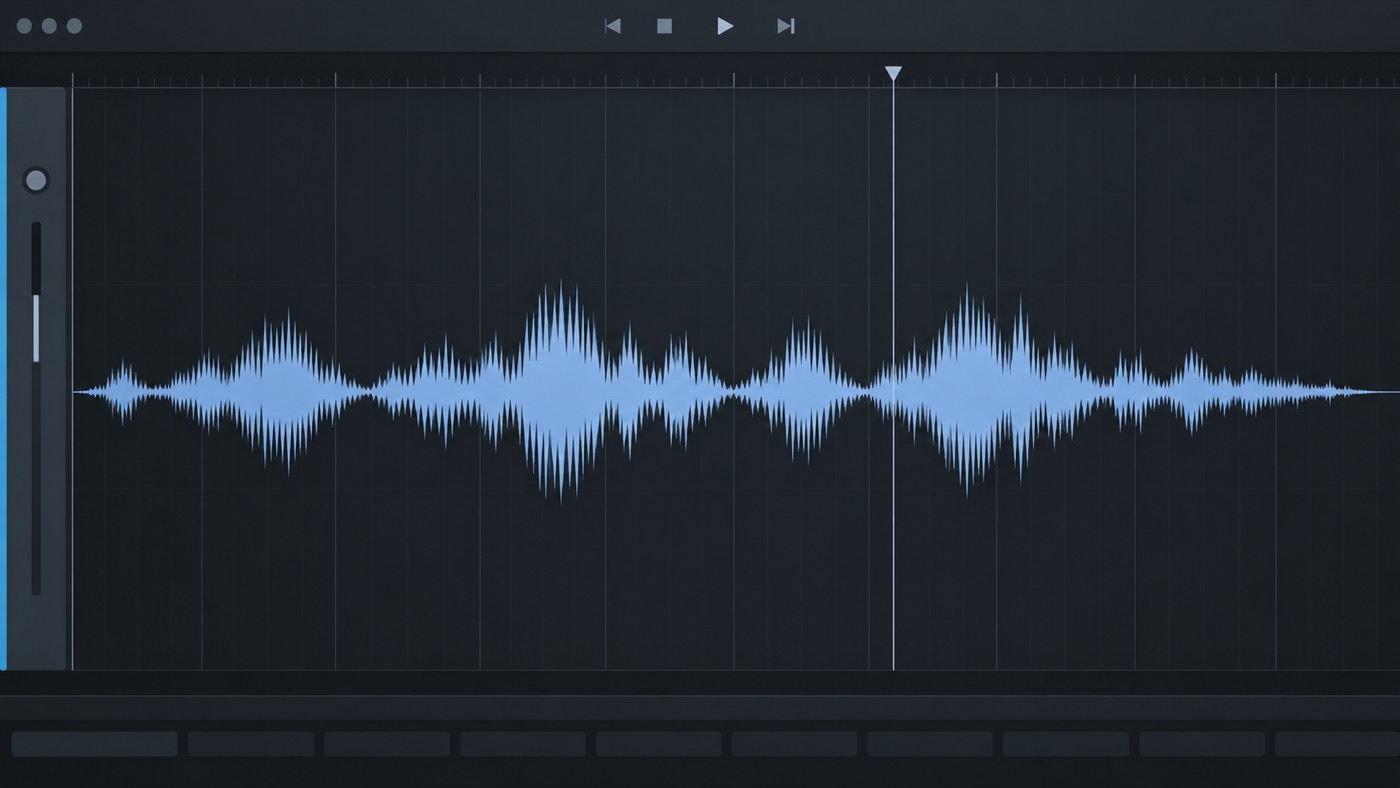
A waveform can show a transient, a pause, or a sudden level change at a glance. It can help locate the breath that needs cleaning or the edit that clicks. Its precision is valuable. Trouble begins when the visual becomes the standard by which a song is judged, rather than one way to inspect it.
What the display can tell you
The shape of an audio file can help identify timing and level events. A spectrogram can expose a recurring noise. A meter can warn that a signal is clipping. These are concrete questions with useful visual answers. The tools are at their best when they direct your ears toward something specific.
They are less useful for deciding whether a chorus feels earned, a voice sounds vulnerable, or a long introduction creates anticipation. Those are experiences that unfold in time and in context.
Keep eyes from leading ears
Try an audio-only pass before opening the editor. Note the point where attention fades or the mix feels crowded. Then use the screen to investigate the cause. The reverse process—staring at a display until something looks uneven—can create work that the listener would never have asked for.
A good production workflow moves between listening and inspection. Neither has to be treated as the enemy of the other. The display is a map, not the territory.
Listen outside the session
A track that looks tidy inside a DAW may feel different in a car, on headphones, or between other songs. Take breaks and return without the visual cues of the session. Listening through a release in order reveals pacing and contrast that isolated waveform views cannot show.
The 1st Drop release pages are designed for that broader context: artwork, sequence, and the neighboring tracks belong to the experience alongside the audio file.
This distinction matters more as production tools become easier to use. A screen can make an edit look objective and final, but a decision still has to be made by somebody listening to the music. Take a note, make the smallest change that addresses it, and play the entire section again. If the change only looks cleaner and does not help the experience, it may not be an improvement. The display should help you find the work; it should not define what the work is.
Keep listening
Explore complete releases · Read more stories
Editorial artwork is illustrative and was created for this series.